
WELCOME BONUS 300%
UP TO €2000 + 100
FREE SPINS
UP TO €2000 + 100
FREE SPINS
Home → Blackjack
Blackjack at Casino Alf: Variants, Rules and Payouts
What Percentage Does Blackjack Count Towards Bonus?
Blackjack contributes exactly 10 percent toward the wagering requirement of the 300% welcome bonus up to €2,000 plus 100 free spins. Slots contribute 100 percent, meaning a €100 bet on slots counts fully as turnover while the same amount on blackjack counts only as €10. This disparity forces players to choose between high-volatility slots or low-contribution table games when clearing the deposit match.
The house edge for standard blackjack variants like the one with six decks and S17 stands at 0.46 percent, reducing the bankroll slower than most slots. A €1,000 deposit yields a €3,000 bonus, requiring €40,000 in total turnover to unlock withdrawals if played entirely on slots. Playing on blackjack tables requires €400,000 in total bets to achieve the same withdrawal eligibility due to the 10 percent contribution rate.
Infinite Blackjack from Evolution offers an RTP of 99.47 percent with stakes ranging from 1 to 5,000 EUR, making it suitable for large bankrolls. Lightning Blackjack provides multipliers up to 25x but maintains an RTP of 99.56 percent within limits of 1 to 2,500 EUR. These live dealer options allow players to meet the 10 percent contribution requirement with higher variance than standard digital versions.
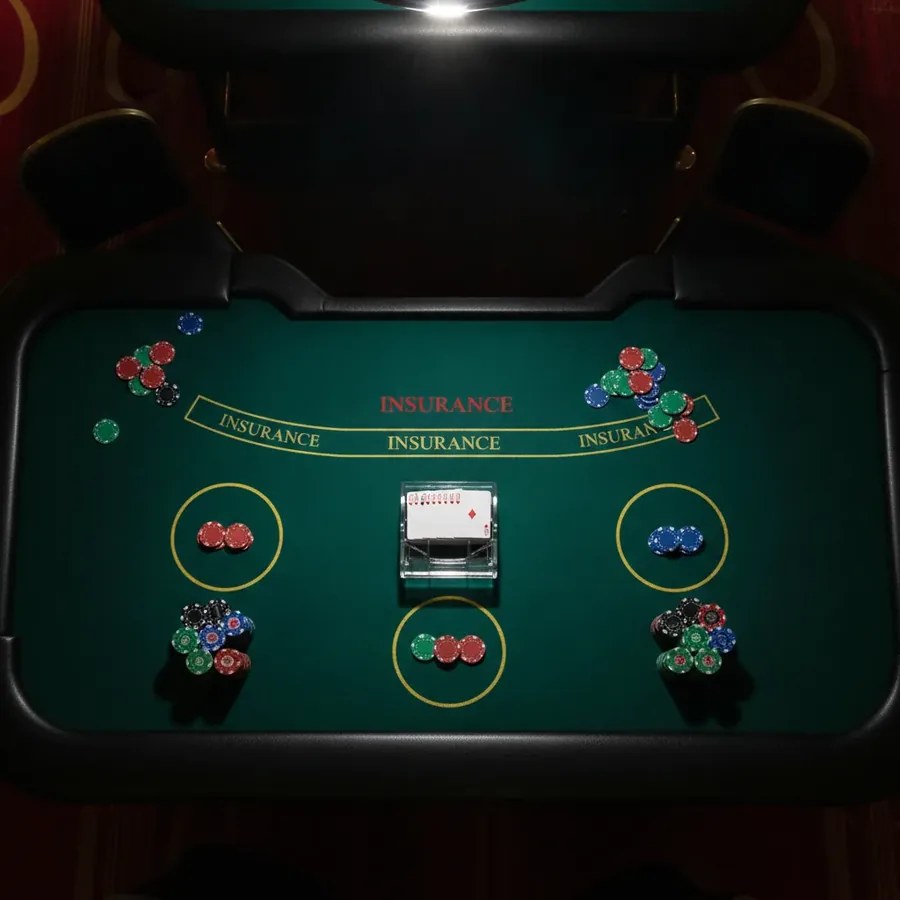
Ignored Basic Strategy Chart: 1 Percent Wasted
Ignoring basic strategy increases the house edge by approximately 1 percent, turning a 0.46 percent advantage into a 1.46 percent disadvantage for the player. On a €10 bet, this error costs roughly €1.00 per hand compared to optimal play using the chart for six-deck S17 rules. Over thousands of hands, this deviation erodes the bankroll significantly faster than any rule variation alone would suggest.
Blackjack Surrender allows players to lose only 50 percent of their bet after the dealer checks for blackjack, improving RTP by about 0.08 percent. Early surrender is rarer but can reduce the house edge by up to 0.6 percent, though late surrender is the standard here. Failing to surrender when the dealer shows an ace or ten leaves the player exposed to a full loss instead of a half-loss.
Insurance bets pay 2:1 but carry a house edge of 7.47 percent, making them statistically poor unless counting cards with a true count above +3. For a deck composition where face cards are depleted, insurance becomes favorable, but for random shuffles, it drains the balance quickly. Declining insurance on every hand except specific counting scenarios preserves the base game RTP closer to the theoretical maximum.
Soft Hand and Hard Hand Practically Distinguished
A soft hand contains an ace counted as eleven, allowing hits without immediate bust risk, such as Ace-6 against a dealer nine. In Liberal Vegas Strip rules, doubling after split is permitted, enhancing the value of soft hands that might otherwise stand prematurely. This flexibility lowers the house edge to 0.28 percent, offering better odds than the 0.46 percent found in stricter six-deck games.
Hard hands lack an ace or contain an ace counted as one, requiring cautious hitting to avoid busting over twenty-one. The difference between hitting soft seventeen and standing on hard seventeen affects the house edge by 0.22 percent in favor of the player when the dealer stands. Tables with S17 rules, like Infinite Blackjack, provide a more predictable outcome for players relying on fixed betting strategies.
Resplitting aces improves the RTP by 0.08 percent by allowing three additional hands from a single pair of aces, increasing potential payout opportunities. However, most casinos limit aces to receiving only one additional card, restricting the growth of the soft hand's value. This limitation balances the advantage gained from resplitting, keeping the overall house edge stable around the stated theoretical return.
Chose Wrong Table for 5 EUR Bankroll
Starting with a 5 EUR bankroll makes playing Lightning Blackjack risky due to its minimum bet of 1 EUR, leaving only five units for variance. Infinite Blackjack starts at 1 EUR as well, but its higher max bet of 5,000 EUR attracts players with larger funds, potentially creating crowded tables. Blackjack Party, with limits from 1 to 1,000 EUR, offers a moderate environment but still consumes the small bankroll rapidly through standard losses.
The 6:5 payout structure on some tables reduces a winning blackjack from 15 EUR to 12 EUR on a 10 EUR bet, destroying the bankroll faster. Even with a 5 EUR starting balance, hitting a 6:5 table means losing half the potential recovery from a single natural win. Players must verify the payout ratio before sitting down, as the difference between 3:2 and 6:5 drastically alters long-term survival rates.
Standard deviation of 1.15 in Liberal Vegas Strip rules indicates moderate volatility, which can deplete a 5 EUR stack in just a few sessions. High-variance side bets like Bust It in Infinite Blackjack offer huge payouts but require precise timing that small bankrolls cannot sustain. Sticking to base bets on 3:2 tables with low house edges provides the longest entertainment time for minimal initial deposits.
Set session stop after 30 percent loss
Losing 30 percent of a bankroll triggers a mandatory stop, preserving the remaining 70 percent for future sessions without emotional decision-making. For a 100 EUR unit, this means stopping after losing 30 EUR, regardless of whether the next hand could theoretically recover the deficit. This discipline prevents the common trap of chasing losses, which statistically leads to total ruin in negative expectation games like blackjack.
With a house edge of 0.46 percent on six-deck S17 games, expected loss per hour is low but consistent if playing continuously. Setting a stop at 30 percent loss aligns with the statistical probability of running bad streaks, protecting the majority of the deposit from inevitable variance. Players using the 300% welcome bonus should apply this rule strictly to avoid violating terms or depleting funds needed for wagering.
Side bets like Hot 3 in Infinite Blackjack have higher volatility and can drain a 30 percent loss threshold much faster than main game bets. By excluding side wagers or limiting them to 5 percent of the session stake, players maintain control over their loss boundaries. This approach ensures that the core gameplay remains within the manageable range defined by the initial bankroll and predetermined exit strategy.
Blackjack variants at a glance
| Variant | Payout | House edge | Rule | Bet range |
|---|---|---|---|---|
| Blackjack Split / Double / H17 – Regel-Effekte | n.a. (Regel-Modifikatoren) | H17 +0.22 Prozentpunkte; RSA −0.08 Prozentpunkte; DAS −0.14 Prozentpunkte | Dealer Hits Soft 17 verschlechtert RTP um 0.22 Prozentpunkte; Resplit Aces verbessert um 0.08 Prozentpunkte; Double After Split verbessert um ca. 0.14 Prozentpunkte; 6 Decks statt 8 – ca. 0.02 Prozentpunkte. | Double – Einsatz ×2 mit einer Karte; Split – bis 4 Hände; Ass-Split meist mit einer Karte. |
| Blackjack Surrender (Late Surrender) – Regel-Effekt | n.a. (Regel-Modifikator) | −0.08 Prozentpunkte | Spieler gibt Hand nach Dealer-Blackjack-Prüfung auf, verliert die Hälfte des Einsatzes. Verbessert RTP um ca. 0.08 Prozentpunkte. Early Surrender ist wesentlich wertvoller (bis −0.6 Prozentpunkte), aber extrem selten. | Rückzahlung 50% des Einsatzes |
| Blackjack 6 Decks, S17, DAS, DOA, Auszahlung 3:2, Basisstrategie | 99.54% | 0.46% | Dealer steht auf Soft 17; Verdopplung auf jeder Zweierkarte; Verdopplung nach Split erlaubt; keine Aufgabe. Basisstrategie ist für diesen Wert zwingend | Blackjack 3:2, normaler Gewinn 1:1, Insurance 2:1 |
| Blackjack Ein Deck, klassische Regeln, 3:2 | 99.85% | 0.15% | Weniger Decks = niedrigerer Vorteil; ein Deck gibt ca. −0.48 Prozentpunkte gegenüber 8 Decks. Oft durch 6:5 Auszahlung kompensiert. | Blackjack 3:2, Gewinn 1:1 |
| Blackjack Auszahlung 6:5 statt 3:2 (6 Decks) | 98.15% | 1.85% | Ersatz von 3:2 durch 6:5 fügt exakt +1.39 Prozentpunkte zum Vorteil des Casinos hinzu – stärker als jede andere Regeländerung. Bei $10 Einsatz zahlt Blackjack $12 statt $15. | Blackjack 6:5, Gewinn 1:1 |
| Blackjack Liberal Vegas Strip (liberale Regeln, 3:2) | 99.72% | 0.28% | Günstigste Regelkombination: S17 + DAS + Resplit + Late Surrender. Standardabweichung 1,15 | Blackjack 3:2, Gewinn 1:1 |
Double Down vs Simple Hit on 11
The Blackjack 6 Decks variant allows doubling after split, a feature that improves the RTP by approximately 0.14 percentage points compared to restricted tables. This rule permits players to double their wager using only one additional card on any two-card hand, significantly increasing potential returns from an initial $10 stake. The dealer stands on soft 17 and does not allow re-splitting of aces, which limits some advanced strategic options available in other formats.
Simple hitting on 11 without doubling yields a standard 1:1 win but forfeits the opportunity to capitalize on the favorable deck composition. When a player doubles down on this total, the expected value rises substantially because the single card draw reduces variance while maximizing profit potential. This mechanical difference separates casual play from optimized strategy, where adhering to basic rules is mandatory for the 0.46% house edge.
Insurance vs Even Money on Own Blackjack
Taking insurance on a natural blackjack effectively converts the payout from 3:2 to even money, locking in a guaranteed return regardless of the dealer's hole card. For a $10 bet, this ensures a $10 profit instead of risking the chance of a push if the dealer also holds a blackjack. This action eliminates the volatility associated with the main hand but caps the maximum win at the standard rate rather than the bonus rate.
Declining insurance preserves the higher 3:2 payout structure, which offers better long-term value despite the risk of losing the entire wager. The insurance side bet itself carries a 7.47% house edge, making it mathematically unfavorable unless the player employs precise card counting techniques. Most analytical models recommend rejecting this offer to maintain the optimal 99.54% RTP inherent to the base game rules.
Blackjack Party runs with two hosts
Evolution's Blackjack Party table features two live dealers who manage the shoe and interact with the stream, creating a high-energy environment for participants. The betting range spans from 1.00 EUR to 1.000 EUR, accommodating both low-stakes beginners and high-rollers seeking larger exposure per round. This format differs from standard tables by prioritizing entertainment value alongside the core mechanics of the twenty-one card game.
Continuous Shuffling Machine shuffles after each round
Infinite Blackjack utilizes a continuous shuffling machine that randomizes the deck immediately after every completed hand, preventing effective card tracking strategies. This mechanism ensures that the theoretical RTP remains stable at 99.47% by eliminating any memory effect from previous cards dealt to the players or dealer. Players benefit from unlimited seats at the virtual table, allowing for constant engagement without waiting for a physical shoe to be reshuffled manually.
Statistics display saves the last 100 rounds
The Lightning Blackjack interface retains data from the previous 100 rounds, providing transparency regarding recent outcomes and multiplier distributions for informed decision-making. This historical record helps players observe trends in the random number generation, although each hand remains an independent event unaffected by prior results. The presence of multipliers up to 25x adds significant variance to the standard 99.56% RTP, requiring careful bankroll management during high-payout sessions.
Surrender vs Playing Out on 16 vs 10
Late Surrender reduces the house edge by 0.08 percentage points, a modest but measurable improvement over standard play where no surrender option exists. This rule allows players to forfeit half their stake after the dealer checks for blackjack, effectively cutting losses on weak hands against strong dealer upcards. The financial consequence is immediate: a 10 euro bet returns 5 euros instead of risking the full amount on a likely loss. Early surrender offers greater value but remains extremely rare in modern online environments.
Playing out a hard sixteen against a dealer ten typically results in a higher expected loss compared to the surrender option available in specific variants. Without late surrender, the player must hit or stand, facing significant risk when the dealer shows a strong card like ten or ace. The absence of this rule forces reliance on basic strategy, which cannot fully eliminate the negative expectation in these high-pressure scenarios. Players seeking to minimize variance should prioritize tables that explicitly list late surrender as a standard feature.
Liberal Vegas Strip rules combine late surrender with other favorable conditions, creating one of the most advantageous base games for mobile players. This variant achieves a house edge of 0.28 percent, significantly lower than standard six-deck games that lack surrender options. The combination of standing on soft seventeen and doubling after split further enhances the player's position at the virtual table. Mobile users can access these optimized rulesets through dedicated live dealer interfaces without compromising on strategic depth.
Even Money only possible with Dealer Ace
Insurance becomes relevant solely when the dealer exposes an ace, triggering the option to secure even money on a natural blackjack payout. This side bet pays 2:1 on the insurance wager, which is limited to fifty percent of the original main stake. For a 100 euro blackjack, taking even money guarantees a 100 euro profit rather than risking the standard 150 euro payout if the dealer also holds blackjack. This mechanic protects the initial win but sacrifices potential upside in non-tie scenarios.
The theoretical return on insurance stands at 92.53 percent, indicating a substantial house edge of 7.47 percent that erodes long-term bankroll stability. Basic strategy universally advises rejecting insurance unless the player employs advanced card counting techniques with a true count of plus three or higher. For the average mobile gambler relying on random distribution, accepting even money mathematically guarantees a lower expected value over time. The cost of certainty outweighs the benefit for most statistical profiles.
Lightning Blackjack introduces multiplier effects up to 25x on winning hands, altering the traditional calculus of even money decisions during volatile sessions. These multipliers apply to the main hand payout rather than the insurance component, offering asymmetric reward structures that differ from static even money contracts. Players must weigh the guaranteed small gain of even money against the potential for massive swings provided by lightning features. The decision point remains strictly tied to the dealer showing an ace.
Infinite Blackjack permits unlimited seats while maintaining distinct side bets such as Any Pair and Hot Three alongside the primary game mechanics. These additional wagers operate independently of the even money conversation but contribute to the overall volatility profile of the session. Understanding the interaction between primary insurance rules and secondary multiplier features helps players allocate their mobile bankroll more efficiently across different bet types.
Side Bet Every Round: Budget Lasts 30 Rounds
The 21+3 side bet combines the player's two cards with the dealer's upcard to form poker hands, creating a parallel wagering track with its own return parameters. This bet activates every round regardless of the outcome of the main blackjack hand, adding a fixed layer of cost to each transaction. With a typical budget allocation, a player might sustain approximately thirty rounds of this supplementary betting before exhausting the designated side fund. The frequency ensures constant engagement but accelerates bankroll depletion relative to base bets alone.
Hot 3 and Bust It represent alternative side bets available in infinite blackjack formats, each carrying distinct payout tables and probability distributions. These wagers focus on specific card combinations or bust outcomes, introducing higher volatility compared to the steady erosion seen in standard insurance plays. Allocating funds specifically for these rounds requires strict discipline, as the house edge varies significantly across different side bet categories. Tracking the remaining budget against the number of active seats helps maintain control over spending limits.
Any Pair offers a simpler structure by paying out on matched ranks among the first three cards dealt, providing frequent but smaller returns compared to complex poker hands. This bet integrates seamlessly into the live stream interface, allowing mobile users to toggle participation without disrupting the flow of the main game. The cumulative cost of placing this wager thirty times must be factored into the total expected loss calculation for the session. Strategic players often limit side bet frequency to preserve capital for the primary blackjack hand.
Bust It specifically targets the dealer's final total, rewarding players when the dealer exceeds twenty-one with specific card counts or suits. This unique mechanic diverges from traditional insurance logic, focusing entirely on the dealer's performance rather than card pairings. Integrating this bet into a thirty-round budget cycle requires monitoring the dealer's streaks and adjusting wager sizes accordingly. The independence from the main hand outcome makes it a distinct risk vector within the overall gaming strategy.
Seat change at the Live Table in 20 seconds
Infinite Blackjack accommodates an unlimited number of participants at a single virtual table, eliminating the physical constraints of brick-and-mortar casino seating. This architecture allows players to join or leave the lobby dynamically without waiting for empty chairs to appear in a queue. The system processes seat changes almost instantaneously, ensuring that mobile users experience minimal downtime between gaming sessions. This flexibility supports rapid bankroll adjustments and spontaneous shifts in playing style.
Traditional land-based tables restrict entry based on physical capacity, often forcing players to wait for others to complete their hands or leave. Digital infinite tables remove this bottleneck, enabling seamless transitions that would take minutes in a physical environment. A twenty-second window represents the maximum delay for interface updates and chip allocation in the most congested live streams. This speed enhances the fluidity of the mobile experience, keeping attention focused on the action rather than administrative delays.
Evolution’s Lightning Blackjack variant utilizes this infrastructure to distribute multipliers randomly across seats, requiring real-time synchronization with all connected players. The speed of seat changes ensures that new participants receive accurate multiplier assignments before the deal begins, preserving fairness and transparency. Mobile devices handle these updates via lightweight web protocols, avoiding the latency issues common in older streaming technologies. The result is a cohesive environment where hundreds of players interact simultaneously without perceptible lag.
Blackjack Party introduces a social layer with dual moderators who guide the pace and atmosphere of the game, influencing how quickly players can engage or disengage. The presence of entertainment elements does not impede the technical efficiency of seat switching, maintaining the twenty-second standard established by the platform. Players joining mid-shoe are integrated into the current state without disrupting ongoing deals or multiplier distributions. This balance between entertainment and technical performance defines the modern live dealer standard.
Side Bets Increase House Edge to 5 Percent
Insurance carries a house edge of 7.47 percent, making it one of the most expensive wagers available in any blackjack variant for the unskilled player. Accepting this bet regularly can inflate the effective house edge of the entire session well beyond the base game rate of 0.46 percent. For a player utilizing basic strategy on the main hand, the inclusion of insurance acts as a significant drain on long-term profitability. Avoiding this side bet is essential for maintaining optimal theoretical returns.
Side bets such as 21+3 and Hot 3 generally carry edges ranging from four to five percent, depending on the specific pay table offered by the studio. These percentages exceed the house advantage of the primary blackjack game, which sits at 0.46 percent under liberal rules. When combined with the base bet, the aggregate expectation shifts negatively, reducing the overall return to player for the session. Mobile players must calculate the weighted average of all placed wagers to understand their true cost per hour.
Lightning Blackjack modifies the base game dynamics with multipliers, yet the underlying side bets retain their inherent disadvantage relative to the main action. The RTP of 99.56 percent applies to the primary hand, but ancillary wagers pull the composite return downward significantly. Players attracted by the visual spectacle of lightning strikes often overlook the mathematical reality that side bets fund the bonus features. Recognizing this trade-off allows for more informed budgeting during high-variance sessions.
Infinite Blackjack offers four distinct side bets, each contributing differently to the overall house edge profile of the table. While the main game remains competitive, the accumulation of side wagers can easily push the effective edge toward five percent or higher. This threshold marks a critical boundary where the game transitions from skill-adjacent to purely chance-based expenditure. Monitoring the ratio of side bets to main bets helps players stay within acceptable loss limits defined by their bankroll strategy.
Contact
Live - online chat
Banking









Providers












Alf Casino 2026